
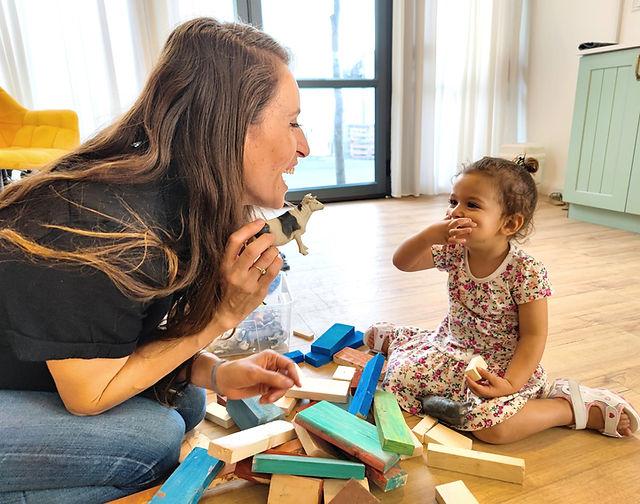
If you’re wondering how to encourage your toddler to talk, you’re not alone. Many parents want to know the best ways to support their child’s communication without turning everyday interactions into lessons.
The good news is that you don’t need flashcards, expensive toys or long therapy sessions to build your toddler’s language skills. Children learn best through everyday conversations, play and responsive interactions with the people they know and love.
The short answer
The best way to encourage your toddler to talk is by talking, playing, reading and responding to their communication every day. Follow your child’s interests, model simple language, give them time to respond, and celebrate all communication attempts—including gestures, sounds and words.
If your toddler isn’t meeting expected communication milestones, a speech pathology assessment can help identify whether they need additional support.
How do toddlers learn to talk?
Toddlers learn language through meaningful interactions.
Every conversation, game, story and everyday routine helps build communication skills.
Your child learns language by:
- Listening to people talk.
- Watching facial expressions and gestures.
- Playing with others.
- Hearing words repeated in everyday situations.
- Taking turns during conversations.
The more opportunities your child has to interact with responsive adults, the more opportunities they have to develop communication skills.
10 ways to encourage your toddler to talk
1. Follow your child’s lead
Talk about whatever your child is interested in.
If they’re looking at a dog, you might say:
“Look! A big dog! The dog is running!”
Children are more likely to learn new words when they are already interested in the activity.
2. Read together every day
Books expose children to new words, ideas and sentence structures.
You don’t need to read every word on the page.
Instead:
- Talk about the pictures.
- Ask simple questions.
- Point to objects.
- Let your child turn the pages.
Even five to ten minutes each day makes a difference.
3. Talk throughout your day
Language grows during everyday routines.
Talk while:
- Cooking
- Shopping
- Bath time
- Getting dressed
- Driving
- Walking outside
Describe what you’re doing using short, simple sentences.
4. Give your child time to respond
After asking a question or making a comment, pause.
Some toddlers need extra time to process language before responding.
Waiting quietly for several seconds often encourages children to communicate.
5. Expand what your child says
If your child says:
“Car.”
You could respond:
“Yes! A big red car!”
This builds vocabulary while keeping the conversation natural.
6. Offer choices
Instead of asking:
“What do you want?”
Try:
“Would you like an apple or a banana?”
Choices encourage communication and reduce pressure.
7. Sing songs and nursery rhymes
Songs help children learn:
- New vocabulary
- Rhythm
- Turn-taking
- Listening skills
- Early speech sounds
Repeating favourite songs helps children predict and join in.
8. Limit background screen time
Children learn language best through responsive conversations with real people.
When possible, reduce background television and create opportunities for face-to-face interaction during play and routines.
9. Celebrate every communication attempt
Communication isn’t just words.
Praise your child when they:
- Point
- Gesture
- Babble
- Make sounds
- Attempt new words
- Look towards you to communicate
These are all important communication skills.
10. Keep it fun
Children learn best when communication feels enjoyable.
Avoid constantly testing your child or asking them to repeat words.
Instead, focus on shared play, conversations and positive interactions.
What should I avoid?
Try to avoid:
- Correcting every mistake.
- Asking too many questions in a row.
- Speaking for your child all the time.
- Pressuring your child to repeat words.
- Comparing your child with other children.
Supportive, relaxed conversations help children feel confident communicating.
When should I seek advice?
Every child develops differently, but it may be helpful to speak with a speech pathologist if your toddler:
- Has very few words for their age.
- Is not combining two words by around two years.
- Has difficulty understanding simple language.
- Rarely attempts to communicate.
- Becomes frustrated when trying to communicate.
- Has stopped using words they previously had.
You don’t need to wait until your child starts preschool or school. Early advice can provide reassurance and practical strategies.
How Unified Speech Pathology can help
At Unified Speech Pathology, we understand that every child develops at their own pace.
Our speech pathologists provide comprehensive assessments to understand your child’s communication strengths and identify any areas where additional support may be helpful.
We work collaboratively with families, providing practical, evidence-based strategies that fit naturally into everyday routines. Our goal is to help children communicate confidently at home, in early learning settings and within their community.
Frequently Asked Questions
Will talking more make my toddler talk sooner?
Talking with your child regularly provides rich language opportunities, but it’s also important to give your child time to respond and actively participate in conversations.
Should I use baby talk?
It’s perfectly natural to use a warm, playful voice with your child. However, modelling clear, simple words and sentences helps children learn language more effectively than consistently using incorrect word forms.
Does screen time help toddlers learn language?
Children learn language most effectively through responsive interactions with people. While some educational programs may introduce new words, conversations, play and shared experiences provide the richest opportunities for communication development.
Do I need a referral?
No. Speech pathologists are first-contact practitioners, so you can book an assessment without a referral. If you’re eligible for Medicare or NDIS funding, our team can also discuss the funding options available.
References
- Speech Pathology Australia. (n.d.). Communication Milestones. Retrieved from https://www.speechpathologyaustralia.org.au
- Raising Children Network. (n.d.). Language development: toddlers. Australian Government supported parenting resource. Retrieved from https://raisingchildren.net.au
- Australian Government Department of Health, Disability and Ageing. (n.d.). Child development and early years. Retrieved from https://www.health.gov.au
- Centre of Research Excellence in Speech and Language (CRESL). (n.d.). Supporting children’s speech and language development. Retrieved from https://www.cresl.com.au
- The Hanen Centre. (2023). It Takes Two to Talk®: Practical strategies for building early language. (Widely used evidence-informed parent coaching program.)
Disclaimer: This article is intended for general educational purposes only and does not replace an individual assessment by a qualified speech pathologist or other healthcare professional. If you have concerns about your child’s communication development, seek professional advice.
Get In Touch
Please fill out the form to submit a referral, or feel free to contact us directly via phone or email.
We’re here to help! Your inquiries are important to us, and we’re committed to providing the support you need.


