
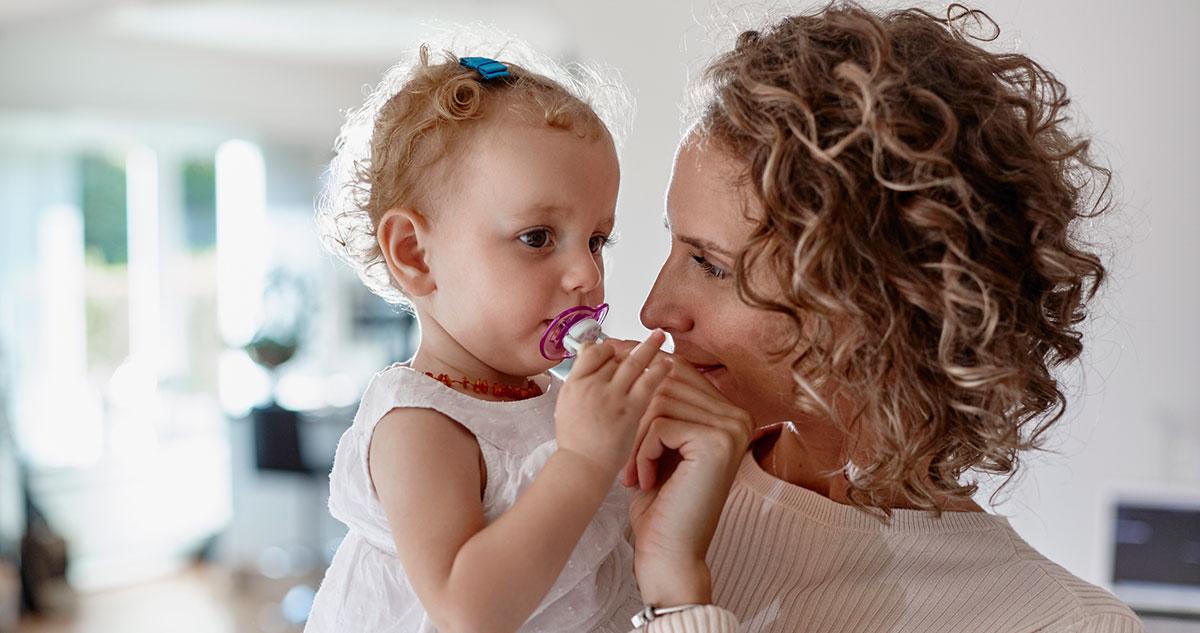
Many parents wonder when the right time is to stop using a dummy (pacifier). Dummies can be a helpful tool for soothing babies, especially during the first year of life. However, as children grow, prolonged dummy use may affect speech development, oral muscle function and dental development.
The good news is that most children can successfully transition away from a dummy with the right support and timing.
The short answer
For most children, it’s recommended to begin reducing dummy use from around 6–12 months and aim to stop using a dummy by around 2–3 years of age. Limiting dummy use to sleep times after infancy can help reduce the potential impact on speech, language and oral development.
If your child is finding it difficult to give up their dummy, a gradual approach is often the most successful.
Why do babies use dummies?
Sucking is a natural reflex that helps babies feel calm and secure.
A dummy may:
- Help settle babies to sleep
- Provide comfort during stressful situations
- Satisfy a baby’s natural sucking reflex
- Reduce discomfort during some routines
The Australian Government recognises that dummies can have a role during infancy, particularly when used safely.
Can a dummy affect speech development?
Using a dummy occasionally is unlikely to cause a speech delay on its own.
However, prolonged or frequent dummy use may reduce opportunities for children to:
- Babble and practice speech sounds
- Experiment with new words
- Interact with others during play
- Strengthen the muscles used for speaking
Children learn to communicate by talking, listening, copying sounds and interacting with people. If a dummy is in their mouth for long periods while they are awake, these opportunities may be reduced.
Can a dummy affect mouth development?
Yes. Extended dummy use may contribute to changes in oral and dental development, particularly if it continues beyond the toddler years.
Potential effects may include:
- Changes in the alignment of the teeth
- Changes to the shape of the palate (roof of the mouth)
- An increased likelihood of an open bite or crossbite
- Difficulty keeping the tongue in an ideal resting position
Not every child who uses a dummy will experience these changes, but the risk increases with prolonged use.
When should my child stop using a dummy?
Every child is different, but many health professionals recommend:
Birth to 6 months
A dummy may be used for soothing if breastfeeding is well established (where applicable) and safe sleep recommendations are followed.
Around 6–12 months
Begin encouraging other ways of settling and comforting your child.
Around 12–24 months
Gradually reduce dummy use during the day.
Reserve the dummy for naps or bedtime only if your child still relies on it.
Around 2–3 years
Aim to stop using the dummy completely.
By this age, children benefit from using their mouths for talking, playing, singing and interacting throughout the day.
Tips for giving up the dummy
Many families find success with a gradual approach.
You could try:
- Limiting the dummy to sleep times only.
- Keeping dummies out of sight during the day.
- Offering cuddles, books or comfort toys instead.
- Praising your child when they manage without it.
- Reading books about giving up the dummy.
- Being consistent with the new routine.
Avoid taking the dummy away suddenly if your child is highly dependent on it, as this can be stressful for some children.
What if my child has a speech delay?
If your child has delayed speech or language development, reducing dummy use while they are awake may provide more opportunities to practice communication.
However, a dummy is rarely the sole cause of a speech delay. If you are concerned about your child’s communication, a speech pathology assessment can help identify the underlying reasons and provide practical strategies to support development.
How Unified Speech Pathology can help
At Unified Speech Pathology, we support families through every stage of communication development.
If you’re concerned about your child’s speech, language or oral development, our speech pathologists can assess your child’s communication skills and provide individualised recommendations. We work collaboratively with families to develop practical, evidence-based strategies that fit naturally into everyday routines.
Frequently Asked Questions
Will using a dummy cause a speech delay?
Not necessarily. Many children use a dummy without experiencing communication difficulties. However, prolonged daytime dummy use may reduce opportunities to practice talking and interacting.
Is it okay to use a dummy at night?
Many families choose to keep the dummy for naps and bedtime while reducing daytime use. As children approach 2–3 years of age, it’s generally recommended to work towards stopping dummy use altogether.
Is thumb sucking better than using a dummy?
Both prolonged thumb sucking and prolonged dummy use can affect oral and dental development. A dummy is often easier to phase out because it can be removed when families are ready.
When should I seek advice?
If your child is over 2 years of age and has very limited speech, unclear speech or difficulty communicating, it’s a good idea to speak with a speech pathologist. If you have concerns about your child’s teeth or bite, your dentist can also provide advice.
References
- Raising Children Network. (n.d.). Dummies: Benefits, risks and weaning. Australian Government supported parenting resource. Retrieved from https://raisingchildren.net.au
- Australian Dental Association. (n.d.). Thumb sucking and dummy use. Retrieved from https://www.ada.org.au
- Speech Pathology Australia. (n.d.). Communication development and milestones. Retrieved from https://www.speechpathologyaustralia.org.au
- Australian Government Department of Health, Disability and Ageing. (n.d.). Infant feeding and early childhood health information. Retrieved from https://www.health.gov.au
Disclaimer: This article is intended for general educational purposes only and does not replace individual advice from a qualified health professional. If you have concerns about your child’s speech, language, oral development or dental health, seek advice from a speech pathologist, dentist or your child’s healthcare provider.
Get In Touch
Please fill out the form to submit a referral, or feel free to contact us directly via phone or email.
We’re here to help! Your inquiries are important to us, and we’re committed to providing the support you need.


