
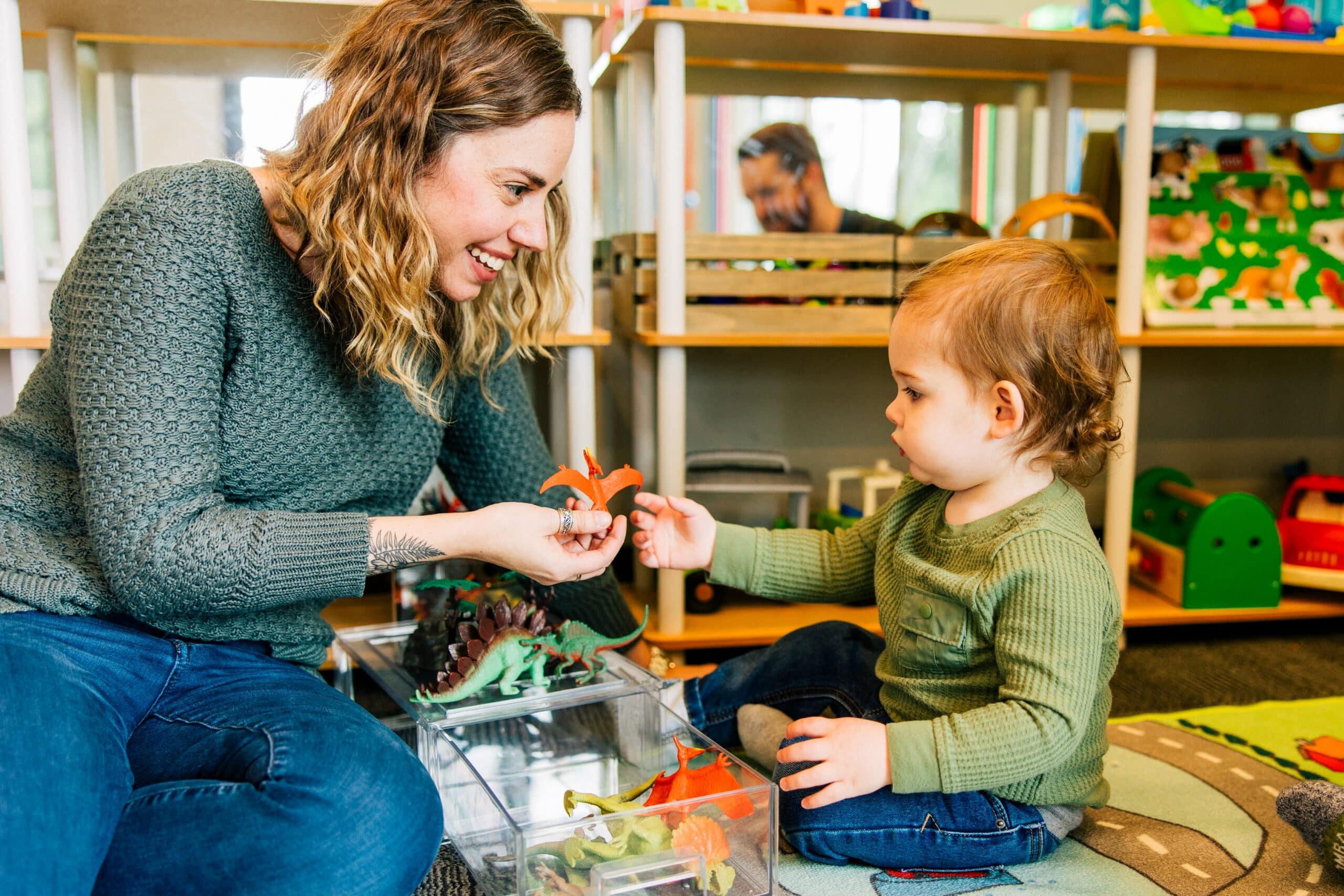
If your 2-year-old isn’t talking yet, it’s understandable to feel worried. Many parents wonder whether they should “wait and see” or seek professional advice.
The good news is that children develop at different rates, and some are naturally later to start talking than others. However, by around two years of age, there are important communication milestones that can help guide whether your child’s speech and language development is on track.
The short answer
By 2 years of age, most children are using at least 50 words and beginning to combine two or more words into simple phrases, such as “more milk”, “Daddy home” or “big ball”.
If your child is not yet using words or is saying very few words by their second birthday, it’s recommended to speak with a speech pathologist. Early assessment can identify whether your child is simply developing at their own pace or whether they would benefit from additional support.
What communication skills should a 2-year-old have?
While every child develops differently, many 2-year-olds are beginning to:
- Use at least 50 words
- Combine two or more words into short phrases
- Follow simple instructions (for example, “Get your shoes”)
- Name familiar people and objects
- Ask for things using words
- Enjoy simple conversations during play
- Copy new words they hear
- Understand much more than they can say
Remember, children usually understand many more words than they are able to speak.
What if my child isn’t talking?
If your child isn’t talking yet, it doesn’t automatically mean something is wrong.
Some children are late talkers, meaning their spoken language develops later than expected but they eventually catch up to their peers.
Others may have an underlying communication difficulty that benefits from early support.
A speech pathology assessment helps identify your child’s individual communication profile and determine the most appropriate next steps.
Signs that it may be time to seek advice
Consider arranging a speech pathology assessment if your 2-year-old:
- Is not using two-word combinations
- Has fewer than 50 words
- Is difficult to understand
- Rarely attempts to communicate using words
- Has difficulty following simple instructions
- Uses very few gestures such as pointing or waving
- Becomes frustrated when trying to communicate
- Has stopped using words they previously used
Trust your instincts. If you’re concerned, it’s always okay to ask questions.
Why might a child not be talking?
There are many possible reasons why a child may be slower to develop spoken language.
Some children may be:
- Late talkers
- Experiencing a speech or language delay
- Living with hearing loss
- Diagnosed with Developmental Language Disorder (DLD)
- Autistic
- Living with another developmental condition
In some cases, there may be no clear reason for the delay.
A comprehensive assessment helps determine your child’s strengths and whether further support is recommended.
Should I wait and see?
Many families are advised to “wait and see”, but current evidence suggests that early assessment is the better approach.
An assessment does not automatically mean your child will need therapy. Instead, it provides valuable information about your child’s communication skills and allows families to begin using strategies that support language development as early as possible.
Early support can make a meaningful difference during the years when children’s brains are rapidly developing language.
How can I encourage my 2-year-old to talk?
Everyday interactions are the most powerful way to support communication.
Try these simple strategies:
- Follow your child’s interests during play.
- Read books together every day.
- Talk about what your child is looking at or doing.
- Pause after speaking to allow your child time to respond.
- Expand on what your child says (for example, if they say “car”, you could say “Yes, a big blue car!”).
- Limit background television during play and conversations.
- Celebrate every attempt to communicate, including gestures, sounds and words.
Communication grows through enjoyable, meaningful interactions rather than pressure to perform.
How Unified Speech Pathology can help
At Unified Speech Pathology, we understand that every child develops differently. Our experienced speech pathologists provide comprehensive assessments to identify your child’s communication strengths and areas requiring support.
We work closely with families to develop individualised, evidence-based therapy plans that build communication skills through play, everyday routines and meaningful interactions.
Our goal is to empower families with practical strategies while helping children communicate with confidence.
Frequently Asked Questions
Is it normal for a 2-year-old to only say a few words?
Some children are naturally later to develop spoken language. However, if your child has fewer than 50 words or is not combining words by around two years of age, it’s recommended to seek advice from a speech pathologist.
Will my child catch up on their own?
Some late talkers do catch up without therapy, while others continue to experience communication difficulties. A speech pathology assessment can help identify your child’s individual needs and whether support is recommended.
Does watching television cause a speech delay?
Television itself does not directly cause a speech delay. However, children learn language best through responsive interactions with people rather than passive screen time. Talking, reading, singing and playing together provide rich opportunities for communication development.
Do I need a referral?
No. Speech pathologists are first-contact practitioners, so you can book an assessment without a referral. If you’re eligible for Medicare or NDIS funding, our team can also discuss the funding options available.
References
- Speech Pathology Australia. (n.d.). Communication Milestones. Retrieved from https://www.speechpathologyaustralia.org.au
- Raising Children Network. (n.d.). Language development: 1–2 years. Australian Government supported parenting resource. Retrieved from https://raisingchildren.net.au
- Australian Government Department of Health, Disability and Ageing. (n.d.). Child development. Retrieved from https://www.health.gov.au
- The Centre of Research Excellence in Speech and Language (CRESL). (n.d.). Supporting children’s speech and language development. Retrieved from https://www.cresl.com.au
Disclaimer: This article provides general information only and should not replace an assessment by a qualified speech pathologist or other healthcare professional. If you are concerned about your child’s communication development, seek advice from a speech pathologist.
Get In Touch
Please fill out the form to submit a referral, or feel free to contact us directly via phone or email.


