
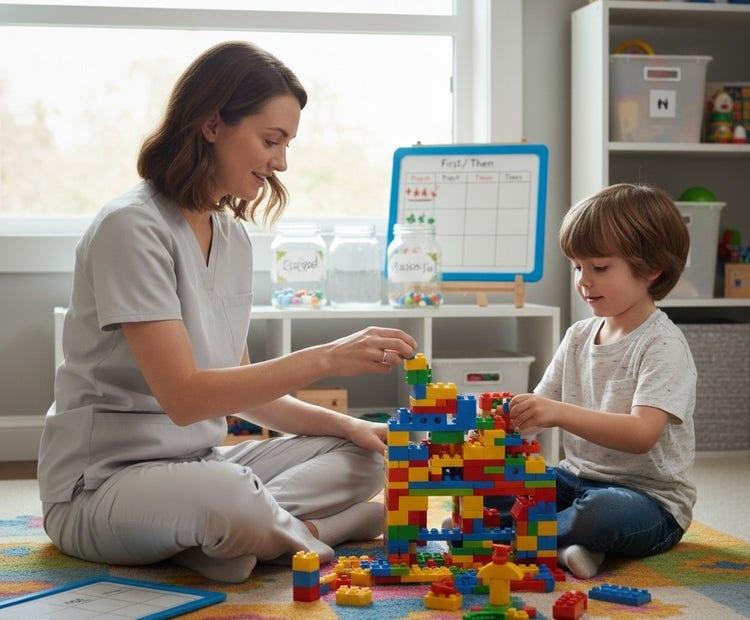
One of the most common questions parents ask is, “How do I know if my child has a speech delay?” Every child develops at their own pace, but there are communication milestones that can help guide what to expect.
Recognising the early signs of a speech delay allows families to seek advice and support if needed. Early assessment doesn’t always mean therapy will be required, but it can provide reassurance, answer your questions, and ensure your child has the best opportunity to develop strong communication skills.
The short answer
A speech delay may become noticeable when a child is not meeting expected speech or language milestones for their age. Early signs can include limited babbling, few or no words, difficulty understanding language, unclear speech, or not combining words into simple phrases.
Remember, every child is different. One sign alone does not necessarily indicate a speech delay, but if you have concerns, it’s always worth discussing them with a speech pathologist.
What is a speech delay?
A speech delay refers to a child who is developing speech skills more slowly than expected for their age. This may affect how clearly they produce sounds and words.
Some children may also have a language delay, meaning they have difficulty understanding or using words to communicate. While speech and language are different, they often develop together.
Early signs by age
Birth to 6 months
At this age, babies are learning the foundations of communication.
You may wish to seek advice if your baby:
- Rarely makes eye contact
- Doesn’t smile or respond to familiar people
- Makes very few sounds or vocalisations
- Doesn’t respond to sounds or voices
- Appears not to startle to loud noises (hearing should also be checked)
Around 6 to 12 months
Communication becomes more interactive during this stage.
Signs to look out for include:
- Limited babbling (for example, not producing sounds like “bababa” or “dadada”)
- Not responding to their name
- Limited eye contact during interactions
- Not using gestures such as pointing, waving or reaching
- Not attempting to imitate sounds or words
- Limited interest in communicating with others
Around 12 to 18 months
Many children begin saying their first words around their first birthday.
You may wish to seek advice if your child:
- Is not using any meaningful words
- Has difficulty understanding simple instructions
- Doesn’t point to objects they want
- Doesn’t use gestures alongside communication
- Becomes frustrated because they cannot communicate their needs
Around 18 to 24 months
Vocabulary usually grows rapidly during this period.
Signs of concern may include:
- Fewer than 20–50 words by around 18 months
- Not combining two words by around 2 years (for example, “more milk” or “Daddy home”)
- Difficulty following simple instructions
- Family members finding it difficult to understand their speech
- Limited interest in communicating with others
Other signs to look for
Regardless of age, it may be helpful to seek advice if your child:
- Becomes frustrated when trying to communicate
- Relies mostly on gestures instead of words beyond the expected age
- Has difficulty playing or interacting with other children
- Stops using words or communication skills they previously had
- Seems to understand much less than children of a similar age
What causes a speech delay?
There isn’t always a single cause for a speech delay.
Communication difficulties may occur alongside:
- Hearing loss
- Developmental Language Disorder (DLD)
- Autism
- Intellectual disability
- Genetic conditions
- Neurological conditions
Some children experience speech delays without an identifiable cause.
A speech pathologist can assess your child’s communication skills and recommend the most appropriate support.
Should I wait and see?
Many parents wonder whether they should “wait and see” if their child catches up.
While some children naturally develop communication skills later than others, seeking advice early can provide valuable information and practical strategies to support development.
Early assessment does not mean your child will necessarily need ongoing therapy. It simply helps identify whether support is recommended and gives families confidence about the next steps.
How can I encourage my child’s speech at home?
Simple everyday interactions make a big difference.
You can support communication by:
- Talking about what your child is doing and interested in
- Reading books together every day
- Singing songs and nursery rhymes
- Giving your child time to respond during conversations
- Following your child’s lead during play
- Celebrating all attempts to communicate, whether through gestures, sounds or words
How Unified Speech Pathology can help
At Unified Speech Pathology, we provide comprehensive speech and language assessments for children of all ages. Our experienced speech pathologists work closely with families to understand each child’s strengths, identify any areas requiring support, and develop individualised therapy plans tailored to meaningful communication goals.
We believe every child deserves the opportunity to communicate with confidence, and we’re here to support families every step of the way.
Frequently Asked Questions
Is every late talker a child with a speech delay?
No. Some children are “late talkers” and naturally catch up to their peers, while others may have an underlying communication difficulty. A speech pathology assessment can help determine the most appropriate support.
Should I be worried if my 18-month-old isn’t talking?
Every child develops differently, but if your child has very few or no words by 18 months, it’s worth discussing your concerns with a speech pathologist.
Can bilingual children have a speech delay?
Learning more than one language does not cause a speech or language delay. Bilingual children may divide their vocabulary across both languages while continuing to develop communication skills.
Do I need a referral to see a speech pathologist?
No. Speech pathologists are first-contact practitioners, so you can book an assessment without a referral. If you’re eligible for Medicare or NDIS funding, we can also help explain your options.
References
- Speech Pathology Australia. (n.d.). Communication Milestones. Retrieved from https://www.speechpathologyaustralia.org.au
- Raising Children Network. (n.d.). Language development in children. Australian Government supported parenting resource. Retrieved from https://raisingchildren.net.au
- Australian Government Department of Health, Disability and Ageing. (n.d.). Child development and developmental concerns. Retrieved from https://www.health.gov.au
- The Centre of Research Excellence in Speech and Language (CRESL). (n.d.). Evidence-based information about children’s speech and language development. Retrieved from https://www.cresl.com.au
Disclaimer: This article is intended for general educational purposes only and should not replace an individual assessment by a qualified speech pathologist or other healthcare professional. If you have concerns about your child’s communication development, seek professional advice.
Get In Touch
Please fill out the form to submit a referral, or feel free to contact us directly via phone or email.


